
Learning to write about impact in a way people can actually feel
The tiny practice that changed the way I write

I think about toilets more than most people.
Not because I’m weirdly obsessed but because of a WaterAid Southern Africa project that changed how I understand words like safety and dignity.
Every time I use a public restroom now, I notice what’s missing: the broken lock, the dim light, the absence of a bin.
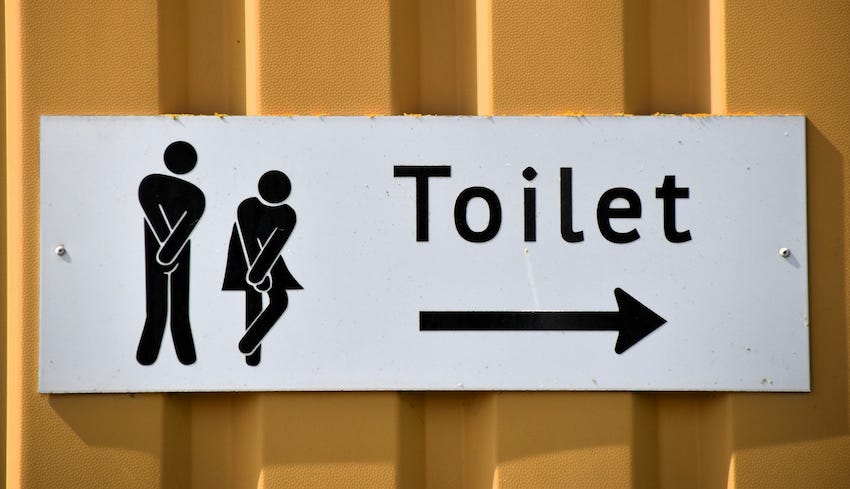
The words we use don’t always match what people see
A few years ago, I was working with WaterAid Southern Africa on a three-year communications and advocacy strategy.
As part of that, we developed a blog post on women-safe toilets (linked to WaterAid’s guide with UNICEF and WSUP).
The list of what makes a toilet “safe” for women was surprisingly simple:
a lock that works
a place to put your bag
enough space to help a child or the elderly person use the toilet
a bin for menstrual products
a light bright enough that no one can hide in the shadows
Small things. Huge difference.
And it changed how I see “safe spaces” forever.
That project reminded me how practical dignity really is.
It’s not abstract. It’s a working lock, a lightbulb that works, a place to put your things.
It was also the first time I saw how easily good intentions turn into vague language.
We talk a lot about “safe spaces” in comms and policy, but this was the first time I understood what that meant in the most literal, physical sense.
We say “safe”.
We say “dignified”.
We say “accessible”.
But those words mean nothing unless people can picture them.
And if they can’t see it, they can’t trust it.
Because safety isn’t a policy idea, it’s a working lock.
Dignity isn’t an abstract value, it’s somewhere to put your bag.
That’s what shifted for me: realising that clarity isn’t just better writing.
It’s credibility.
It’s respect.
When we describe things as they are — when we show the lock, the light, the bin — we give people something solid to believe in.
Tool of the week: The visibility test
What it is:
A 5-minute practice to turn abstract impact into something people can actually see and trust.
When to use it:
Whenever your message includes one of those noble-but-vague words — safe, inclusive, sustainable, empowering, equitable.
How to do it:
Circle every abstract word
Ask: “What does this look like in real life?”
Add one observable detail (something your reader could point at)
Cut one sentence of fluff
Examples:
Before: “We help women build confidence.”
After: “We train women to speak at community meetings and run savings groups.”Before: “We make schools inclusive.”
After: “We’ve added wheelchair ramps, sign language classes and flexible timetables for learners with disabilities.”Before: “We support safe childbirth.”
After: “We supply delivery beds, solar lamps for night births and clean water for midwives.”
Why it matters:
Specifics build trust. When you swap a buzzword for a real-life detail, people believe you. Not because you said it, but because they can see it.
Gotcha:
This isn’t about dumbing things down. It’s about letting your language meet your impact on the ground.
Your turn
Next time you write a sentence with a big, abstract word - pause.
Ask: What does this look like? What’s the lock on the door in this story?
PS
What’s a word in your work that changed meaning once you saw what it looked like in real life? Hit reply, I’d love to hear.
Beautiful piece about dignity and safety. Thank you for making these concepts so concrete, @Wendy van Eyck. And thank you for all you do.